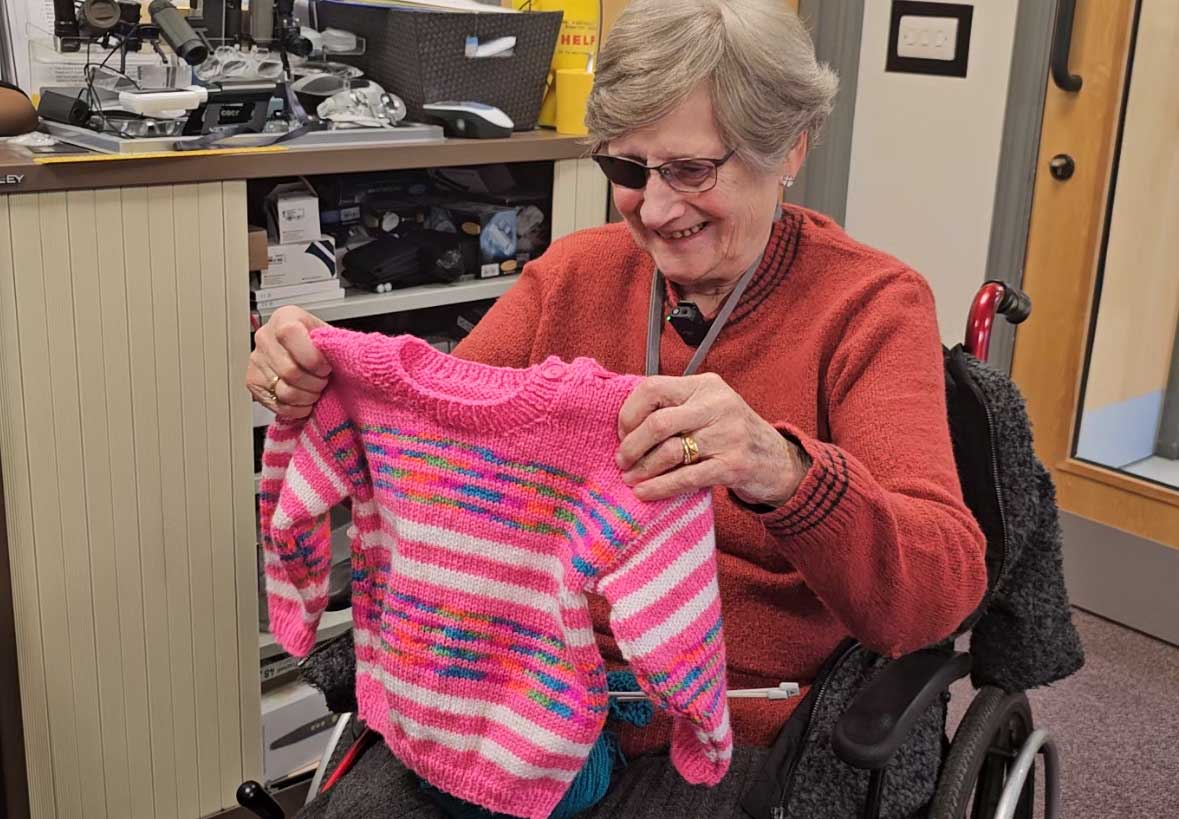
Living with a visual impairment is a profoundly personal journey, often requiring not only physical adjustments but also emotional resilience and a reimagining of daily life. For Hilary, a member of the Partially Sighted Society, this journey has been both challenging and transformative. Her story highlights the emotional and practical obstacles faced by those with low vision, while also showing the importance of community, support, and self-compassion in maintaining wellbeing.
When Hilary first experienced her sight loss, she found it incredibly difficult to adapt. “When it first happened, it was very hard,” she recalls. “I didn’t see many people to talk to until I came here.” Discovering the community at PSS marked a turning point. Through activities such as knitting circles and summer craft sessions, she began to rebuild her sense of purpose and connection. Yet, the loss of her ability to engage in creative pursuits, something she once cherished, has been particularly difficult. “I can’t draw two lines together and make sure they meet,” she explains. “I did find that hard. I still do find it hard. Even with adaptations, you just can’t do it and it is frustrating.”
This sense of loss is something many living with low vision can relate to. As Hilary reflects, “It’s almost like a bereavement. You’ve lost something that was creative and did all these things. It’s as though you have to find a new way of being and reinvent yourself.” This process of adaptation is not merely physical but deeply emotional, requiring patience and self-compassion.
One of the most challenging aspects of living with partial sight is the lack of understanding from others. “People assume you can either see, or you can’t,” Hilary notes. “They don’t grasp how you can see to do some things but not others.” This misunderstanding can lead to frustration, particularly in social situations or when navigating public spaces. While friends and family often adapt, strangers can be less accommodating. “Even in hospitals, they don’t always believe you when you say you can’t see,” she adds.
Despite these challenges, Hilary has found ways to remain positive and engaged. She emphasises the importance of the support of the PSS community, which offers not only practical advice but also a sense of belonging. “There’s a shared understanding among people with visual impairment or low vision, and that’s been comforting,” she says. Hilary’s story serves as a reminder that while sight loss can feel isolating, it doesn’t have to define one’s life. With the right support, adaptations, and a resilient mindset, it’s possible to navigate this journey with grace and determination.
If you or someone you know is living with a visual impairment, remember that you’re not alone. The Partially Sighted Society is here to offer guidance, community, and a listening ear. Together, we can help one another find new ways to thrive.
For more information or support, please contact the Partially Sighted Society on 01302 965195. Let’s continue to build a community where everyone with a visual impairment feels seen, heard, and supported.