Good to Grow: Gardening Tips for People with Sight Loss By The Partially Sighted Society
There is something wonderfully satisfying about gardening. Whether you are growing tomatoes on a windowsill, tending a few pots on the patio or attempting to keep an entire garden under control, it offers fresh air, gentle exercise and the pleasure of watching something grow.
Sight loss does not have to mean giving it up. A few thoughtful changes can make gardening safer, easier and, most importantly, more enjoyable.
Give everything a home
Keeping tools, compost, gloves and watering equipment in consistent places is one of the simplest ways to make gardening easier. Returning everything to the same spot means less time spent searching through flowerbeds for a hand fork that was definitely there a moment ago.
A box, bucket or gardening apron can help keep smaller tools together while you work. Tools with brightly coloured handles are easier to locate, while tactile markers, elastic bands or raised stickers can help distinguish one tool from another by touch. Thrive also suggests painting existing tool handles white or choosing brightly coloured equipment for the same reason.
Always place tools flat on the ground or securely in a container rather than leaving them standing with their points facing upwards. A rake left lying in the grass has a habit of announcing itself at the worst possible moment.
Try the ping pong ball trick
One of our green-fingered friends, Vladimir Milinkovic, shared a tip that is both simple and rather ingenious.
He places ping pong balls over exposed bamboo canes and other narrow, pointed supports. This makes the ends easier to locate and provides some protection if he bends down near them. A small hole can be carefully made in the ball so that it fits securely over the top of the cane.
This can help guard against a common hazard: leaning forward to inspect a plant and finding a bamboo cane exactly where your face is heading.
Purpose made cane toppers are also available, but ping pong balls are inexpensive, brightly coloured and easy to come by, a small price for some extra peace of mind in the vegetable patch.
Check them regularly to make sure they remain firmly attached, and remove or reposition any plant supports that are no longer needed.
Use contrast wherever possible
The Royal Horticultural Society (RHS) recommends contrasting colours in planting and garden design for people with sight loss, and it can make a genuine difference for gardeners with useful remaining vision.
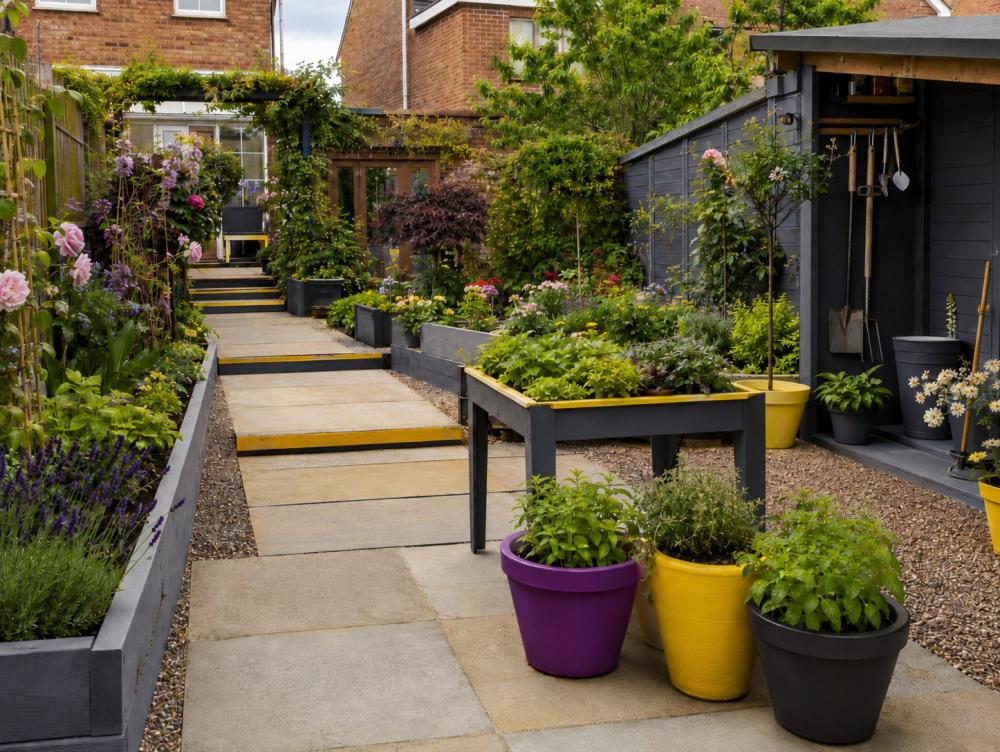
Brightly coloured pots stand out well against dark soil or paving.
White, yellow or fluorescent tape can be wrapped around tool handles, steps, tap handles and the edges of containers. Pale flowers planted along the front of a darker border can also help mark its boundary. Try to avoid placing objects that are similar in colour next to one another. A green watering can left in long green grass may end up staying there until autumn.
Create clear routes
Level, open and uncluttered paths make a real difference. Trim back plants that lean across walkways and avoid leaving hoses, tools or bags of compost where they can become trip hazards.
Changes in texture can provide useful information underfoot. Gravel, paving, decking and grass all feel different and can help indicate where one part of the garden ends and another begins.
Thrive suggests using a change in surface texture or colour to mark bends in a path. A distinctive ornament can also act as a useful landmark. Low edging around beds can prevent soil from spilling onto paths and make the boundary easier to find with a cane, foot or hand.
Bring the garden closer to you
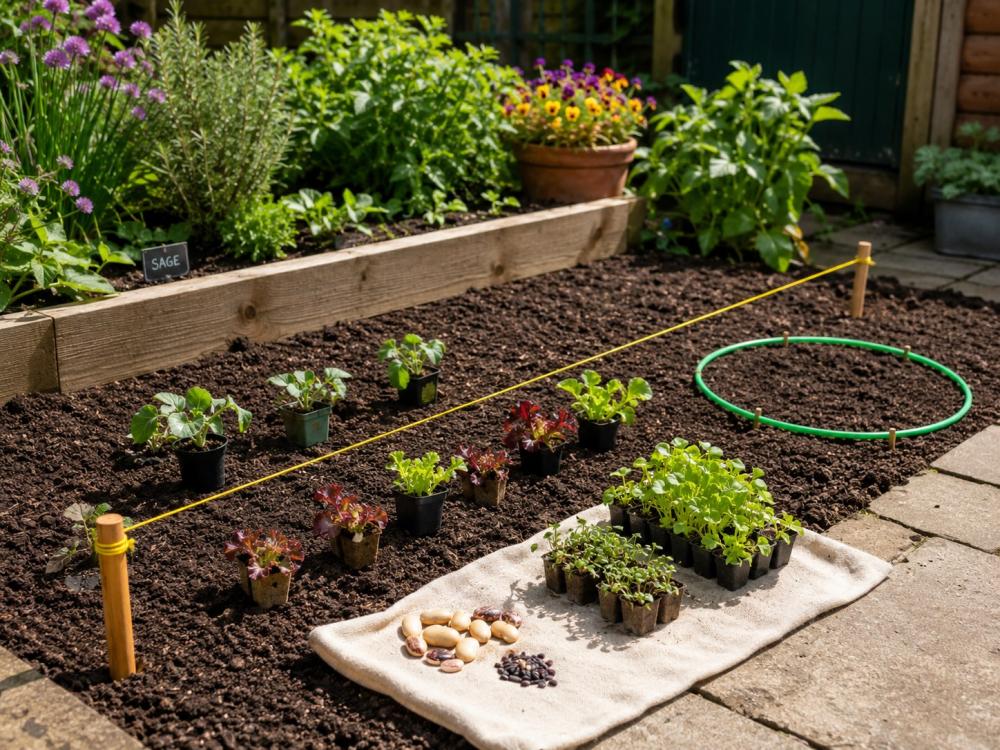
Reducing the need to bend, stretch or work at ground level is one of the biggest advantages of raised beds, planters and pots. They also create clearly defined growing areas, making it easier to remember where different plants are located.
The RHS also recommends features such as raised beds and wide, accessible paths for gardeners with disabilities.
Containers can be arranged by size, shape or texture. Herbs might go in round pots, flowers in square containers and vegetables in a raised trough. There is no correct system.
Plant with all the senses
A garden offers far more than something to look at. Scented plants such as lavender, rosemary, mint, thyme and honeysuckle can create recognisable areas and help with orientation.
Texture adds another dimension. Lamb's ear has soft, velvety leaves, rosemary is firm and needle like, and ornamental grasses rustle when the wind moves through them. Plants that attract bees and birds add another layer of sound, although thorny or irritating plants should be positioned away from paths and areas where you regularly reach.
Herbs are particularly rewarding because they are easy to identify by smell and touch. Just remember that mint has ambitions of taking over the world, so it is usually best kept in a pot.
Take your time
Gardening is not a race, whatever the weeds may suggest. Work on one clearly defined area at a time and pause regularly, particularly in hot weather. Wear sturdy footwear and gardening gloves, and take extra care when using sharp tools. Secateurs should be locked when not in use, and powered equipment should only be used when you feel confident that the surrounding area is clear.
For larger jobs, there is no shame in asking a friend, relative or neighbour to help. In our experience, gardeners are often willing to lend a hand, particularly when tea and biscuits are mentioned.
The best garden is not necessarily the neatest, largest or most colourful.
It is one that you can use, recognise and enjoy. With a little organisation, plenty of sensory planting and perhaps a few strategically placed ping pong balls, sight loss need not stop anyone from getting their hands dirty.