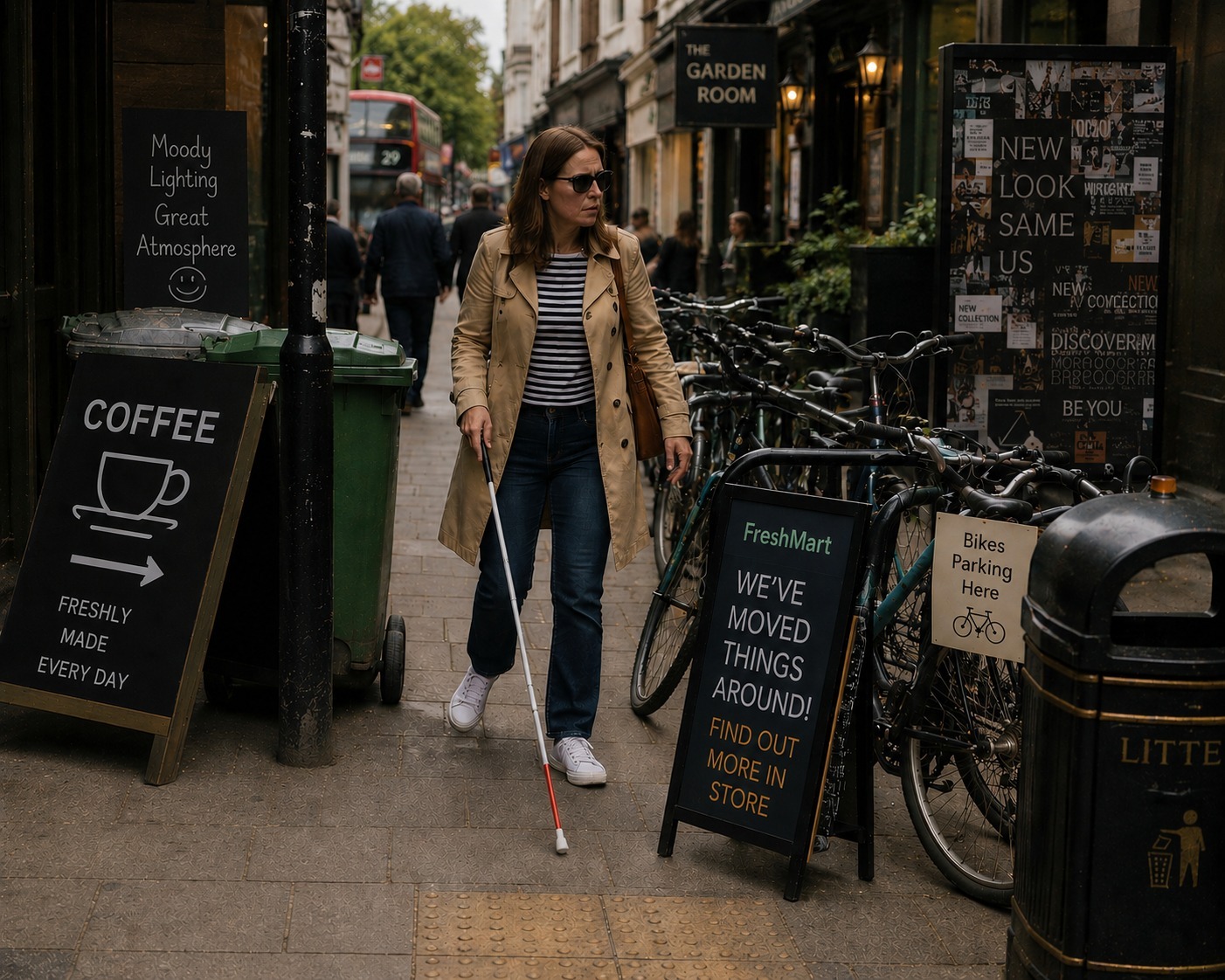
For people with sight loss, that question comes up every single day.
It's the restaurant that thinks mood lighting is an amenity. The supermarket that rearranges its layout without warning. The pavement cluttered with A-boards, parked bikes, and street furniture that wasn't there yesterday. The office that replaced all its signage with sleek, low-contrast text because it looked better on the rebrand. The GP surgery where the check-in screen is a glossy touchscreen in a sun-drenched waiting room.
None of these things were designed to exclude. But that's almost the point. When nobody in the room thinks to ask, exclusion just happens quietly and the people affected are left to navigate around it, every day, without complaint, because complaining is yet another thing that takes energy.
Accessible design isn't a specialist concern. It's just good design. And it starts with noticing the problem exists.
At The Partially Sighted Society, we're asking people to start noticing. If you live with sight loss, tell us in the comments: where does the world let you down most? And if you design, build, or manage spaces, what's one thing you could change tomorrow?