Semaglutide and Sight Loss: What PSS Wants You to Know About NAION By The Partially Sighted Society
Anyone who watches the news or scrolls through social media will have noticed how often semaglutide comes up these days.
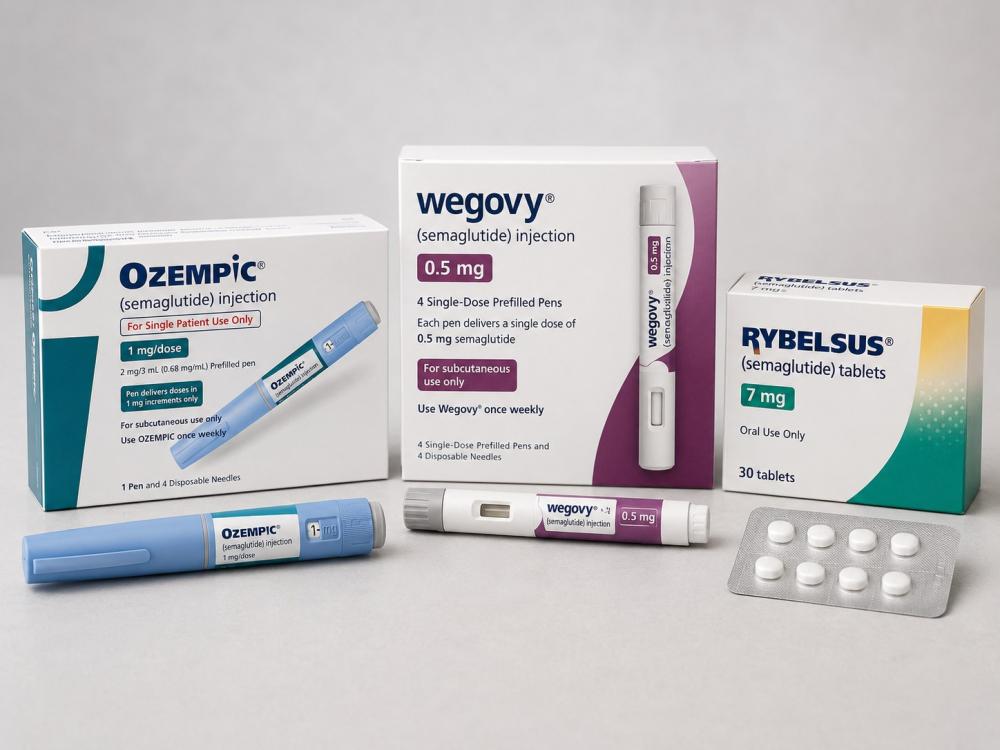
Sold under names such as Ozempic, Wegovy and Rybelsus, it has become one of the most talked about medicines of the decade, prescribed to help manage type 2 diabetes and, increasingly, for weight loss. In February 2026, the UK's medicines regulator added a new warning to that conversation, one that will matter to many people connected to The Partially Sighted Society. Semaglutide has been linked, in very rare cases, to a serious eye condition called non-arteritic anterior ischaemic optic neuropathy, known for short as NAION. Before anything else, it is worth saying plainly: this is not a reason to panic, and nobody should stop taking a prescribed medicine on the strength of a headline. But it is a condition worth understanding, because catching it early can matter enormously.
What exactly is semaglutide?
Semaglutide belongs to a class of drugs called GLP-1 receptor agonists. In plain terms, it copies a hormone the body already produces after eating, one that helps release insulin and makes people feel fuller for longer. That is why it works for both diabetes management and weight loss, even though not every brand is licensed for both uses. Ozempic and Rybelsus are approved for type 2 diabetes, Wegovy for weight management and cardiovascular risk reduction. Rybelsus, unusually, comes as a tablet rather than an injection.
And what is NAION?
NAION happens when blood flow to the front of the optic nerve, the nerve that carries what the eye sees to the brain, is suddenly reduced. The result can be a sudden and permanent loss of vision. The word "non-arteritic" simply distinguishes it from a rarer, more urgent form of the condition caused by inflamed blood vessels.
People affected usually notice it in one eye rather than both. The vision does not hurt, but it blurs or clouds without warning, sometimes with a patch of shadow or darkness appearing somewhere in the field of view. Many people first notice something is wrong when they wake up in the morning. There is currently no treatment that can undo vision already lost this way, which is exactly why speed matters when something changes.
So how worried should people be?
Not very, statistically speaking. The Medicines and Healthcare products Regulatory Agency puts the risk at up to one person in every 10,000 taking semaglutide, placing it firmly in the "very rare" category. A European review of clinical trials, real-world data and other evidence found that people with type 2 diabetes taking the drug had roughly double the relative risk of developing NAION compared with those who were not. That sounds worse than it is. Doubling a very small number still produces a very small number, working out at around one extra case for every 10,000 people treated over a year.
Not every study agrees, and regulators are open about that. But the overall weight of evidence was judged strong enough to justify adding NAION to the official safety information. That does not mean every case reported so far was definitely caused by the drug rather than by something else going on in that person's health.
Who tends to be more at risk?
This is where things get complicated. Type 2 diabetes itself raises the risk of NAION, as do high blood pressure, high cholesterol, smoking, older age and certain shapes of optic nerve. Many people taking semaglutide already carry several of these risk factors, which makes it genuinely difficult for researchers to work out how much of the added risk comes from the drug itself and how much comes from the conditions it is treating.
What to watch for
Anyone taking Ozempic, Rybelsus or Wegovy should treat the following as reasons to seek help immediately rather than waiting for a routine appointment: a sudden loss of vision, even partial; eyesight worsening noticeably over a short space of time; new blurring, clouding or darkening in one eye; or a new patch of shadow or missing vision appearing anywhere in the field of view.
The advice from the MHRA is to go to an eye casualty unit if one is nearby, or otherwise to accident and emergency, so that an ophthalmologist can examine things urgently. Not every sudden visual change will turn out to be NAION, but all of them deserve a same-day assessment rather than a wait-and-see approach.
Should I stop taking it?
No, not on the basis of this warning alone. For most people, the benefits of controlling diabetes, managing weight or protecting the heart will far outweigh a risk this small. Anyone who feels uneasy should raise it with whoever prescribed the medicine rather than simply stopping. Treatment would normally only be reviewed or withdrawn once an ophthalmologist has confirmed that NAION has actually occurred.
It is also worth making sure every healthcare professional involved in someone's care, including opticians and GPs, knows that semaglutide is being taken, particularly if it was prescribed privately, since that information does not always find its way automatically into NHS records.
The bigger picture
As more people take semaglutide, safety monitoring becomes more important, not less, and updates like this one are part of how that monitoring works in practice. NAION remains rare. The message from The Partially Sighted Society is the same one the regulator is giving: do not stop a prescribed medicine out of fear, but never ignore a sudden change in vision, whatever might be causing it.