When Sight Loss and Cognitive Difficulties Occur Together By The Partially Sighted Society
When a person living in a care home experiences both sight loss and cognitive difficulties, the combined effect can be particularly challenging. Problems with memory, attention, understanding or decision-making may make it harder to adapt to changes in vision, while reduced sight can increase confusion, anxiety and dependence on others.
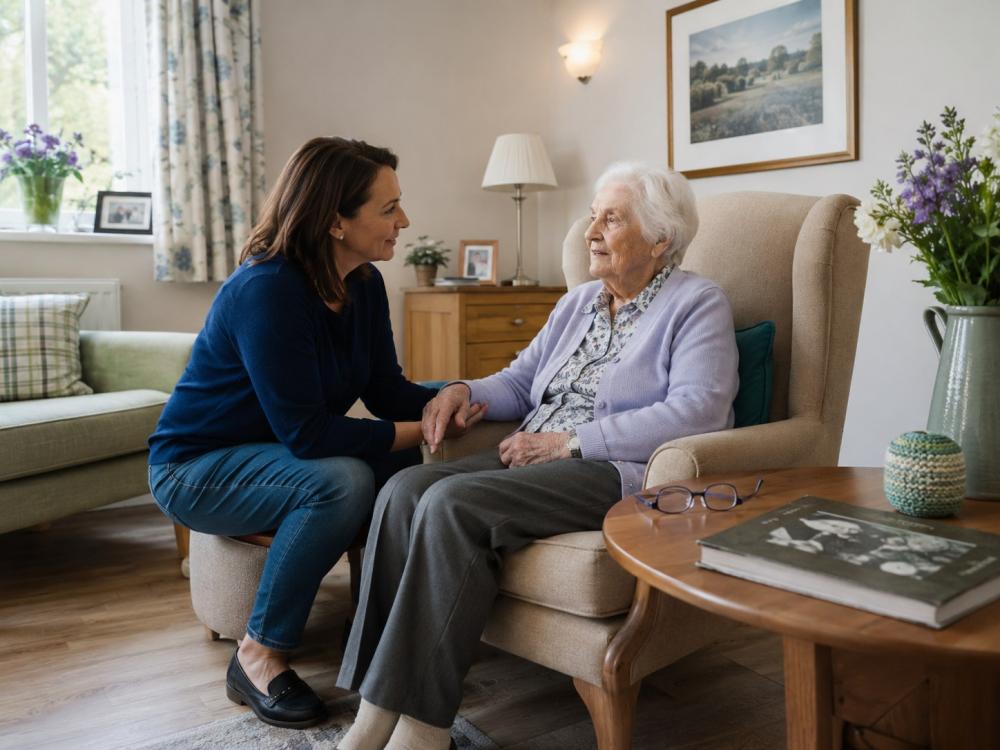
For families, it can sometimes be difficult to know which condition is causing a particular change. A person may appear not to recognise someone because of memory loss, because they cannot see the person clearly, or because both difficulties are affecting them at the same time. What looks like confusion may be made worse by poor lighting, glare, unfamiliar surroundings or glasses that are missing or no longer suitable.
Understanding how these difficulties interact can help families and care staff provide more thoughtful support.
Sight involves the brain as well as the eyes
An eye examination is an important part of understanding someone’s vision, but the eyes are only one part of the visual system. The eyes gather visual information and the brain interprets it.
This means that a person can sometimes experience difficulty making sense of what they see even when the eyes themselves appear relatively healthy. They may struggle to follow lines of text, recognise objects, judge distances or understand a visually busy scene. These difficulties can be linked to changes in the way the brain processes visual information.
However, it is important not to assume that every visual difficulty is caused by cognitive decline. Treatable eye conditions, an outdated glasses prescription, poor lighting or other health problems may also be involved. Any new or significant change in vision should be assessed by an appropriate healthcare professional.
Safety and mobility
Sight loss and cognitive difficulties can both affect balance, confidence and awareness of hazards. Together, they may increase the risk of falls or make it harder for someone to move independently around the care home.
A resident may become disoriented if furniture is moved, struggle to find their room or fail to notice obstacles in a walkway. Changes that seem minor to other people can make a familiar environment feel confusing or unsafe.
Families may find it helpful to ask whether walking routes are kept clear, whether lighting is even and comfortable, and whether the person receives support in unfamiliar areas. Consistency matters. Keeping furniture and personal belongings in the same place can reduce unnecessary confusion.
Communication and recognition
Sight loss can affect more than reading. It may make it difficult to recognise faces, follow gestures, notice facial expressions or understand what is happening across a room.
When visiting, introduce yourself by name rather than waiting to be recognised visually. Speak clearly and calmly, and explain what you are doing before touching, moving or assisting the person. Allow extra time for them to respond.
It is also worth considering hearing. When both hearing and vision are reduced, communication can become much more difficult, particularly for someone who is already struggling to process information.
Emotional wellbeing
Losing confidence in one’s sight can be frightening. When this is combined with memory or thinking difficulties, the person may not always understand why tasks have become harder. This can lead to frustration, anxiety, withdrawal or distress.
A resident may stop joining activities because they cannot see what is happening, because the environment feels overwhelming or because they are worried about making a mistake. This can sometimes be mistaken for a lack of interest.
Regular contact, reassurance and familiar routines can help. Music, conversation, favourite scents, familiar objects and well-known stories may provide comfort and connection. Activities should be adapted rather than automatically withdrawn.
Supporting independence
Even when someone needs more help, maintaining choice and independence remains important.
Small adaptations can make everyday activities more manageable. Talking clocks, audiobooks, tactile objects, voice-activated technology and adapted games may all be useful, depending on the person’s interests and abilities.
It can help to focus on what the person can still do. They may be able to complete part of a familiar task, make a choice between two options or take part with verbal prompts and gentle assistance.
The aim is not to test the person or correct every mistake. It is to support confidence, enjoyment and involvement.
Making the care environment easier to understand
A well-designed environment can make a significant difference.
Good, even lighting can help, but very bright light or glare may be uncomfortable. Strong colour contrast can make doors, furniture, handrails and important objects easier to identify. For example, a dark chair may be easier to see against a pale floor than against a similarly coloured carpet.
Clear routes, uncluttered surfaces and consistent placement of belongings can reduce confusion. Signs may be helpful for some people, but they should be simple, high contrast and placed at an appropriate height. For others, a familiar object or photograph may be more meaningful than written words.
Changes should be introduced carefully. A major reorganisation intended to make a room safer can sometimes leave the person unable to find anything.
Glasses and cognitive impairment
Wearing prescription glasses can become more difficult for someone living with dementia or another cognitive condition.
The person may not remember that they need glasses, may not recognise their own frames or may remove them because they feel unfamiliar or uncomfortable. This can be especially challenging for someone who only began wearing glasses later in life.
Glasses should be clean, comfortable and easy to find. A distinctive case, a consistent storage place or frames that are easy to recognise may help. Gentle prompts are usually more effective than repeated correction or confrontation.
If glasses are regularly rejected, it is worth checking whether they still fit comfortably and whether the prescription remains appropriate. Pain, pressure behind the ears, dirty lenses or an unsuitable prescription can all make someone reluctant to wear them.
Do not assume every change is dementia
Changes in behaviour should not automatically be attributed to cognitive decline.
Increased reluctance to move around, more frequent falls, difficulty eating, reduced engagement or sudden confusion may be linked to a change in vision. They may also be caused by infection, medication, pain, hearing loss or other health concerns.
Families can ask when the person last had an eye examination, whether their glasses are being worn and whether staff have noticed any change in how they respond to visual information.
A sudden loss of vision, new eye pain, flashes, a curtain-like shadow or a sudden major change in behaviour requires prompt medical attention.
Questions families may wish to ask
When speaking with care home staff, families may find it helpful to ask:
- How does my relative’s sight affect their daily life?
- Are there particular times or places where they seem more confused?
- Are their glasses clean, comfortable and available when needed?
- Have there been any recent falls or changes in mobility?
- How are activities adapted to suit their vision and cognitive abilities?
- Have hearing and vision been considered together?
- What helps them feel calm, confident and involved?
- Is there anything we can do during visits that would be helpful?
Making visits more meaningful
Simple changes can make visits easier and more enjoyable.
Greet the person by name and say who you are. Sit where the lighting is comfortable and avoid speaking from across the room. Reduce background noise where possible.
Use touch only with permission and let the person know before you move closer or offer physical help. Familiar music, scents, photographs, objects or stories may help create connection, even when conversation is difficult.
Try not to test memory by asking repeated questions such as “Do you remember who I am?” A gentler approach is to offer information naturally: “It’s Shaun. I’ve come to sit with you for a while.”
The person remains at the centre
A person living with both sight loss and cognitive difficulties is still the same person, with their own preferences, history, relationships and ways of finding enjoyment.
Support does not always need to involve major changes. Sometimes the most helpful things are simple: introducing yourself clearly, keeping important belongings in familiar places, making sure glasses are clean and available, adapting an activity rather than removing it, and allowing the person more time to understand what is happening.
Families know their relative in ways that care staff may not. Care staff, in turn, may notice changes that are less obvious during occasional visits. Sharing these observations can help everyone build a clearer picture of what the person needs.
There may not always be a simple explanation for a change in behaviour or ability. What matters is remaining curious, avoiding assumptions and asking whether sight, hearing, health, medication, pain or the surrounding environment could be contributing.
Above all, good care is not only about reducing risk. It is about helping the person remain involved, comfortable and connected to the people and experiences that matter to them.
For more information, or help finding services that may be right for you, call us today.